Monday, 10 November 2014

32. Normal Distribution

Normal Distribution

Half the women attending antenatal care in rural Tanzania are, on average, under-weight. Interestingly, however, this percentage is exactly the same in UK antenatal clinics. Does this mean that poor nutrition is not an issue in African villages?


Facts never lie. But neither do they always stand up to close scrutiny. It should not surprise you, of course, that 50% of women will be ‘under-weight’, if by this you mean that they are under the average. By definition half of Tanzanian women will be below Tanzanian average, and half above. The same logic applies to the UK. The true fact is of course that by UK standards, far too many rural Tanzanian women are malnourished.

My point is that I could, if I chose, weave the words to support whichever tapestry of beliefs I subscribed to. Vital as facts might be, they are worse than useless without correct interpretation.

(By the way, just to reassure all those who struggle when dealing with numbers, please keep reading. This blog brushes past the prickly subject of stats, but in a diligently thorn-proof way. I am well aware that 100 out of every 15 people in the world have dyscalculia, and for those with painful kidney stones, it’s made worse by also having dyslexia.)

(OK. A serious aside this time: On a scale from Asperger’s to broad, creative thinking, far and away the majority of genius lies towards the end of the scale where numbers and the written word are seen in a different way. ‘The gift of dyslexia’ encompasses some of the most important lights in the history of humanity – da Vinci and Einstein, for instance.)

Anyway, the point is that most of us have a touch of dyscalculia when it comes to interpreting scientific advance. The packaging of the stats-message often matters considerably more than what you find if you can be bothered to take off the wrappings. Present the message well, and the whole world is listening. Because of this, for instance, Mother Earth now spends £20+bn /year on statins. In more than 95% of cases, these statins do no good whatsoever, and in some cases, they do harm. (Notice my clever packaging of the anti-statin message, and please don’t stop taking them if you need them. I was just making a point.)

But it is indeed a hugely important point: At this rate of headstrong and introspective spending, in the 30 years it takes Generation X to pass to the next axis, the world will have spent £600bn on statins – almost all of it ‘wasted’. That would pay for everyone on the planet, every single soul, to have, for instance, safe water and sanitation; or an iPad-mini; or a luxury overnight trip for two on the Manchester Ship canal from Thelwall Viaduct to Weaver Sluice.


How in heaven’s name do we prioritise our collective spending like this? The answer is that we are too ready believe what we are told. When an expensive drug or gadget comes along, we can be tantalised and seduced into believing that we cannot live without it. Or, when a cheap or even cost-neutral bit of sense tries to influence the way we live, we can be too eager to dismiss it as ‘unproven’. (It took 30 years, for instance, from the first evidence that smoking was bad for you, for the message to be routinely adopted by doctors. It took even more than 30 years in the case of the deleterious effects of too much sugar. And, on a personal note, it has taken even more years again for me to assimilate the data that Malbec may not completely wipe out the harm done to one's metabolism by sausages. And I’m still not 101% convinced …)

So here’s the rub: we need information, and we need it to be well-interpreted, in order to legitimise and optimise our use of resources.

We need it, yes, but we don’t often get it, and so our choices can be skewed.

This need for the naked truth is particularly the case when our enthusiasm to do the right thing blinds us to potential negative effects of our actions. Our experience of anecdotal benefit and our anticipation of success, might too easily get in the way of learning proper lessons about what we have been doing. In the last generation or two of Aid from the privileged to the under-privileged nations, these lessons have often had to be learnt more than once. As a result, for instance, every armchair philanthropist now knows that we have to teach people to fish rather than giving them their daily mackerel. (A philosophy yet to bear much fruit in some parts of the Sahara.) The disappearance of overseas aid and good will into black holes is still too common a phenomenon in Africa. The rocks of inefficiency and corruption can shipwreck good-hearted dreams, and the swirling currents of perverse incentives and political expediency can cause many a good scheme to founder.

I am building up to identifying a critical insight about the EMBRACE-Tushikamane project: We need to be careful that we are using the resources to best effect.

Part of the answer is evaluation of impact: Did we save lives? Without doing much harm? However, even such a seemingly simple parameter of measurement is a sophisticated business, needing careful thought. If, for instance, as a response to the problems identified by women’s groups, we implement an improved transport system, linked to training of birth attendants to know which women to send in, then many more women might arrive at the hospital gates …


… including those who previously would have died at home on the bloody floor of their hut, or under the grubby lantern of a despairing attendant. The project might therefore, at first, seem to be delivering more death in hospital – but less in the community. Indeed, there may be far less overall, without this being apparent. These are tough issues needing a professional response.

These thoughts on measurement are going to need thoughtful development if EMBRACE-Tushikamane is going to have a long-term sustainable shelf life. I am delighted to report then, that Ammalife has found the wherewithal to support a researcher - Helen Williams - on a three-year PhD, devoted to the EMBRACE-Tushikamane project!! She will be carefully observing, documenting and measuring what happens, and in particular will be looking at how we build bridges across all those organisations trying to help. Suddenly, we have a real live hope that the project will produce transferable lessons for saving lives throughout rural Tanzania.

Meanwhile, let me finish by arguing with myself a little. Let's face it, I am the only one authorised to write on the blog site, and there is therefore the danger of portraying just one view of the topic. Fortunately, in this case I disagree wholeheartedly with myself, if I am trying to say that scientific evaluation is only about stats and normal distributions.


Statistics are vital, but so is narrative and observation of what happens. Stats could tell you that your results fall way outside the normal distribution, and that something unusual is happening. But they will not tell you why, so you might not be able to replicate success nor to rectify what seems like failure. An analogy: your data tells you that none of your flat-packed IKEA furniture seems to stay up long after you reconstruct it.  Number-crunching reveals that not a single item in your new bedroom suite withstood the weight of (respectively), an ironically full cup of coffee; an inquisitive cat; and a weary, end-of-day backside. What these stats don’t explain to you is that hammers don’t work on screws. Observation of what is happening can be as important as measuring the degree to which it happened.

And here is a further complexity: There will be times in science when numbers will be not just inadequate, but utterly beyond inadequate to tell the story. When Copernicus inferred that the Earth revolved around the sun, he did not need to check a representative number of solar systems to ensure that his conclusion reached statistical significance. When Watson and Crick tracked down the structure of DNA, they did not have to repeat the task with other molecules to prove it was not a fluke. At the heart of science is observation, combined with understanding about what you are seeing. Statistics are just a means to that end.

Numbers are important. Vital. But we should use the right tool for the right purpose. Sometimes it is analysis of data, followed by wise inference. Sometimes it is insightful observation and description. Sometimes, even science is inadequate to encapsulate wisdom, and only poignancy can capture the moment. I remember many many times, too many to count, when I have had the privilege to save a woman's life and to deliver a baby into her desperate and exhausted arms, and neither numbers nor words would suffice in describing what just happened.

So let me finish with an example of charitable intervention in Africa which reconciles all of these quandaries, which observes, measures, understands, adjusts - and delivers where it matters.  In the last blog I mentioned Water Aid’s wonderful To Be A Girl campaign, to provide villages with water so that the girls can be freed to live more appropriate lives.

The campaign recently wrapped up, and if you don’t cry when you watch the video, you get your money back:


In African development, things can grind to ignominious and poorly understood defeat, under a wrapping of dyscalculia. Or they can work wonderfully. Water Aid is one of the successes, and water distribution is the foundation of future possibility - along with education, food, transport, community health, and eradication of extreme poverty. These are the most basic of human needs, sadly lacking throughout much of Africa. EMBRACE-Tushikamane seeks, in one small part of the planet anyway, to turn under-development into normal distribution.


Wednesday, 22 October 2014

31. To be a girl

‘To be a girl’ is a wonderful campaign launched by Water Aid:


It highlights the mediaeval task-list that gets handed out to children across the world, along with their two X chromosomes. For girls, from as soon as they are no longer carried, they carry.  
They carry water …


babies …


… or often both:


Weighing down your head with water many times a day becomes a substitute for school, where you otherwise might have weighed down your head with something altogether more useful and liberating. And school is where you might have hoped to be a girl - a child being cared for, instead of one doing the caring.

(As a non-girl, I have here to say that we males also suffer our unfairnesses. One of these is that girls routinely outperform us when they do get to school:


In the article quoted, they put this down to learning styles, and I think that there might be something in that. My daughters’ learning style was to listen to the teacher and participate in class, then after school to do their homework. It seemed to work for them, I must admit.)

Nevertheless, the sad fact is that millions of girls, even in the twenty-first century, never experience the luxury of having a teacher to listen to. The insidiously grave consequences for the world of this huge burden of unfairness, go way beyond the problem of sexism. It is true of course that girls and women are far more likely to be oppressed or suppressed by the opposite gender, but the origin of enforced girl-labour is not archetypally sexist in the way we now define it. It is cultural. And that makes it much more difficult to undo: The division of labour between males and females in under-developed rural settings was a practical response to the challenges of Africa. In general, in centuries gone by, men were more suited to hunting and to protecting livestock and families. Women were more suited to child-rearing. This culture was just accepted, and put up with courageously. Then, as now, for many put-upon women, laughter and song were never far from the lips, just as tragedy and hardship were never far from the door. The realities of life.


However, in this more enlightened age, we have opportunity – indeed a duty – to deal with the realities of death. In rural Tanzania, a peaceful country, approximately 1 in 30 women can expect to die prematurely related to conception and childbirth. 99% of these deaths would not have happened, had the birth occurred in the UK.

1 in 10 children die before the age of 5. The causes of child death are also poignantly preventable: birth complications, malnutrition, malaria, pneumonia, diarrhoea, and infectious diseases, (TB, HIV, measles, meningitis, whooping cough, tetanus).

For Europeans, it might seem that this is a comfortably distant problem needing a little humanitarian largesse. Bear in mind, however, that no cossetted comfort of a rich civilisation ever lasted more than a few centuries. Every so often in the history of mankind, there is an 'adjustment', with a regression to the mean. For much of humanity, we are currently living through such an adjustment, whereby our European level of privilege is dropping towards the world average. How awfully far we have to fall, if we do not do something to bring up the underprivileged underclass, who even now, far too often, sell all they have to pay bad people to despatch them from the African coast.

What can be done? Well, reading the list of causes of death, you would be forgiven for thinking that the solutions were uncomplicated, relatively cheap, and surely manageable, even in rural Africa. Family planning for a start. In a setting where six babies is the average, reducing this to two or three would deal a hefty blow to both maternal and child mortality, at the same time as reducing HIV. Immunisation would pick up half the list, and better nutrition, more breast-feeding, and better management of pregnancy and childbirth would complete the decimation of disasters.

Well you would be right. In fact, the World Health Organisation agrees with you. What’s more, the whole planet agrees with you, and said so nearly four decades ago in the Declaration of Alma Ata:

What happened? I’ll tell you what happened. This did:


Instead of going to school, she did jobs. If she grows up, she will not know anything about Alma Ata. Immunisation and antenatal care and condoms and antibiotics and micro-nutrition will be part of a tapestry of irrational aversions in her culturally-attuned mind.

Despite many heartening successes, and steadily improving averages, simple health care messages cannot be ‘done’ to a village or its people. Sustainable progress is based on understanding and self-determination. And that in turn depends on female education. Without the mothers themselves understanding what is needed, and without women chivvying for it, nothing much progresses in the villages of rural Africa.

That is why EMBRACE-Tushikamane seeks first to empower women to understand and prioritise their problems, before helping them to respond. 

The type of response which may result has already been fine-tuned in the Berega area by the American charity ‘Hands4Africa’:


Brad Logan, its founder, is an OB GYN by profession, but on finding the deep-rooted problems of rural Morogoro province, his response was prescient and practical. It is summed up by H4A’s Mission Statement:

Hands4Africa is committed
to improving the lives of mothers, children and families
through sustainable solutions
to reduce poverty, provide education, and improve healthcare.

Because of the work of H4A, the very isolated village of Mnafu now has a place where the next generation of mothers can learn how to change their world.

Mnafu School before Hands4Africa …


… and afterwards:


To be a girl.

If you want to know what it means to be a girl in Mnafu, you’ll have to ask one.

Within this generation you might be able to do so in a much more meaningful way, and get a response, for the first time in history, full of hope for the community.

Friday, 19 September 2014

30. In the Dog-house


For consumers of the annals of human endeavour, two memorable morsels ricocheted around the social media last weekend. The one you are less likely to have sampled is the sight of Queen Elsa pouring an ice-bucket over the head of a well-meaning but gullible ex-obstetrician:


The intention was to raise funds to stop mothers dying in childbirth; to give hope to communities in rural Tanzania; to help a part of the world where each village has ten children die every year:


It’s only a week on, and maybe these things trickle through slowly, (or maybe Threadneedle Street is scrutinising the destiny of such an exodus of bullion), but nothing much seems to be happening on the fundraising site:


(I suppose another possibility is that the Bank of England was waiting until Scotland Has Decided. It would be awful if they paid-the-bearer-on-demand-the-sum-of lots of Sterling, only to discover that the donor had been Scottish. A dreary process would then ensue, of trying to get the bullion back in return for the Scottish GrOats.)

The story more likely to have captured your attention was the burning down of the dog’s home in Manchester. The home is a sort of refuge for dogs, where they can find friendship; comfort; posts smelling of other dogs’ urine; and, if needed, counselling. It is a sign of a deeply sophisticated society that we care in this way for a species that has brought to ours so much in the way of comfort, unquestioning friendship, and chewed sticks. I have noticed in my short transit through Life on Earth, that a person who is kind to humans is rarely cruel to animals.


Looking after dogs, then, is a noble enough undertaking, and it would not have been surprising to have observed generous support after the home was tragically struck by such a devastating fire. What was more than surprising – even astonishing – indeed ‘Blairs-decide-to-retire-to-holiday-home-in-Merthyr-Tydfil’ level of unlikeliness – was that in just a single weekend, they raised £1.2 million for the re-building of the dogs’ home:

http://www.bbc.co.uk/news/uk-29204953

I know that my ice-bucket challenge did not tap into the same market, and I do not have the same appeal: Apart from the lower half of my face I am not furry. I do not have wistful eyes.


If someone throws a tennis ball, I am perfectly capable of almost completely ignoring it. I am not intrigued by the smell of other people’s trousers. If I find anything disgusting whilst walking through the park, I am neither tempted to eat it nor roll in it. I am allowed on the sofa.

I could go on, but I am conceding the point that I lack the canine X-factor. In a head-to-head fund-raiser between Lassie and I, to buy somewhere to rest our weary heads, the collie-dog would have the donors rounded up before I had even downloaded the Lottery’s “Fifteen Things You Should Know Before Applying For An Ageing Hippy Weary Cranium Residence-Enhancement Grant”.

But what would Lassie think about spending that amount on her home, at the cost of her owner’s life, and those of her children? If dogs really are a person’s best friend, would they truly want to move into million-pound kennels when, 5000 miles away, the young lads who would love to scamper with them are beset by malaria, malnutrition, infestations, infections, and tragedy; and who, too often, will never throw a stick again.


I do not exempt myself from this sobering reflection. What I have spent on our two dogs this last dozen years would have paid for many wells. For a school perhaps. For a land-rover ambulance. For many, many emergency C-sections, performed in poor light on mothers desperate to survive and see their child.


Where would we be, though, if suddenly we were equitable in the distribution of our largesse? Theme parks and cinemas would close down as pleasure-seekers found new comfort in sending their spare cash to the needy. The clothing industry would grind to a halt as we wore what we wore until it fell off our backs, giving the money released to the naked and the cold. Malbec producers would call an emergency summit in Mendoza, as I replaced my nightly nectar with enough dirty water to moisten my mouth.

The world is not fair, and never will be. For there to be wealth-sharing, there has to be wealth.

But, on the other hand, where would we be, in this tragically unequal world, if we closed our ears to the anguish of death and tragedy, albeit in distant lands? Where would we be if the cries of the suffering and the desperate never penetrated our cocoon? Where would Lassie be, if, knowing that all this was going on in the world, she accepted a millionaire’s kennel?

For me, dog-lover though I am, I know where I would be if I ignored humanity in favour of other species.

In the dog house.


Wednesday, 17 September 2014

Guest blog: Dr Olivia VandeCasteele

Role: A visiting doctor from Belgium


Last year, on the 20th of november, my partner Cédric and I arrived in Berega, to stay there for two months. 

https://www.youtube.com/watch?v=D9YBOYn10FA&list=UUcGPVMRnWyglSeIJ4sssvQg


Before I came to Berega,  I had just graduated as a General Practitioner and finished a degree in Tropical Medicine. Dr Sion Williams, who had been working here for a year, invited me to come and help in the hospital. 

In the beginning I was working together with Sion on the ward, particularly with women and children. After 2 weeks of adaptation I started working in the out-patient department where the 'clinical officers' examine and treat walk-in patients and decide who will be admitted in the hospital. 

These clinical officers are recruited either from nurse graduates or sometimes directly from secondary education – though often they will first have had to work for some year to find the money for their training. They spend 3 years in Clinical Officer training, which is mostly practical. I tried to learn how they work and tried to teach where appropriate (optimization of their clinical examination, broadening of their knowledge of differential diagnosis and antibiotics,…)

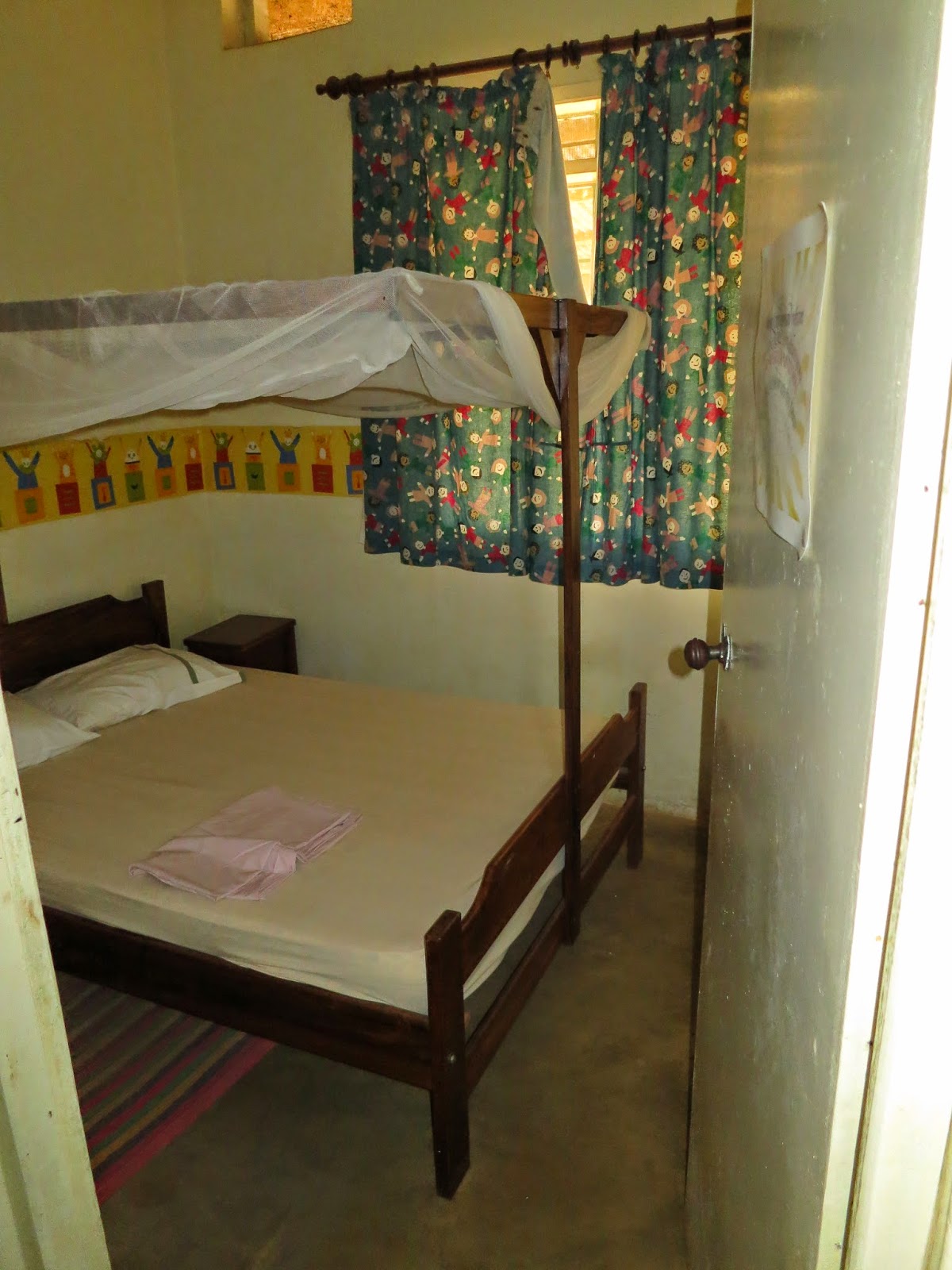
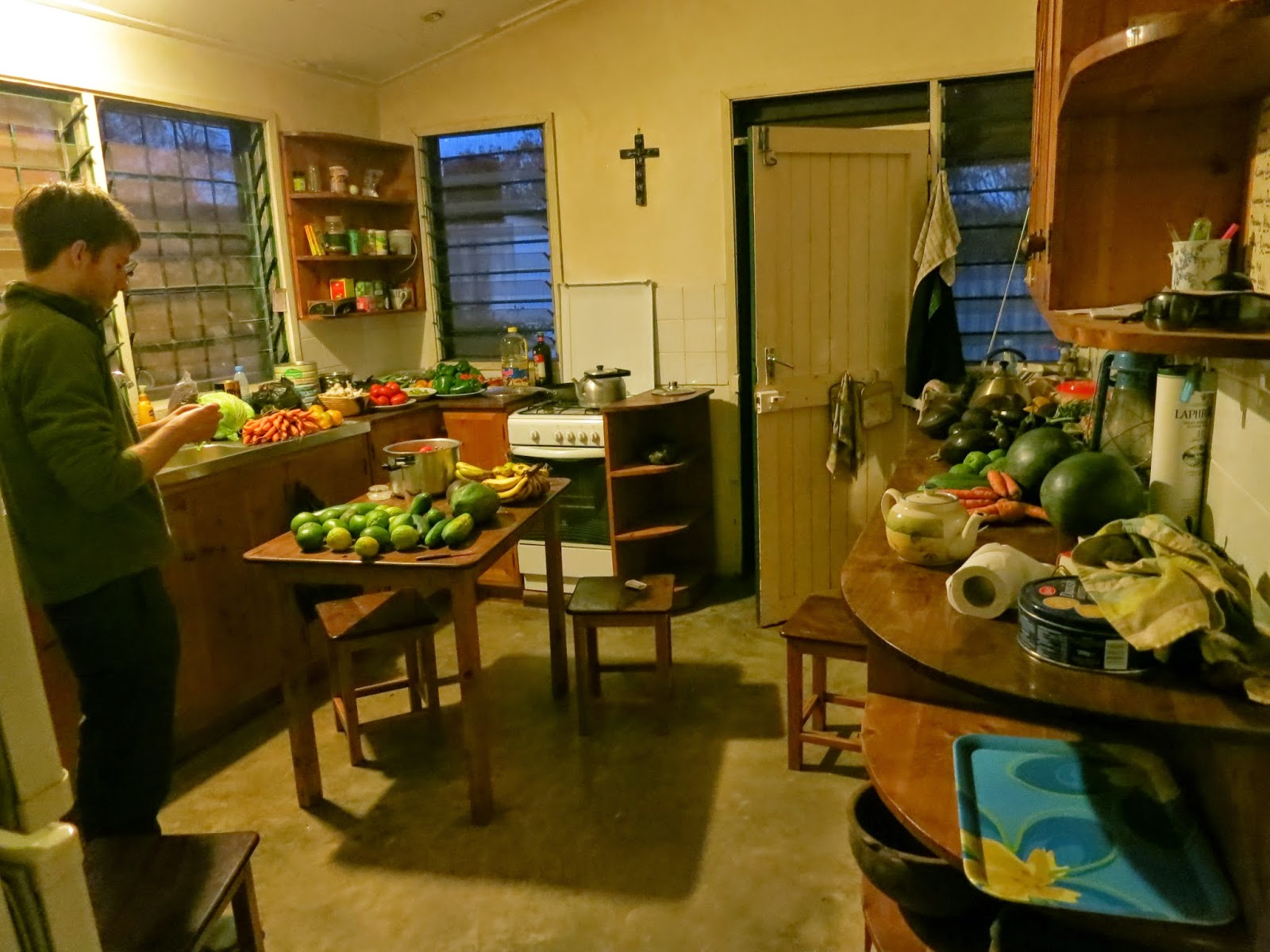
Although there were times when Sion and Abdallah had been the only medical staff here, during my stay we were working in the hospital with 3 European doctors, 2 Tanzanian doctors and 5 clinical officers! All the doctors and nurses are given a house on the compound . We were living with ‘the Europeans’ in a big house, with a huge kitchen and living room and several sleeping rooms:


In the evening we could go for a beer in the ‘pub’ – a small  hut in the village with an awning and chairs outside, that last year at last acquired electricity and a fridge!

Check out:

We bought our food in the little stalls in the village:


or at the weekly Monday market:


At weekends we rested, visited Morogoro and explored the surroundings of Berega. 


https://www.youtube.com/watch?v=cDGP2GJRWuA&list=UUcGPVMRnWyglSeIJ4sssvQg

We were invited to a Christmas party at the orphanage, with a great meal and a lovely performance of African singing and dancing. (The hospital has its own orphanage ...) On the evening before Christmas we cooked our own meal and celebrated together at home.  On Christmas we were invited to join celebrations in the village.

Cédric, my partner, signed up to do some community work. He works as a chef, and taught children at the local school how to bake during their summer break. He gave driving lessons to local women in the village. He also worked with a charity in the village called ‘Hands for Africa’by trying to make soap from local products, produced on the farm, and by visiting families in the village in order to give the children a chance to get a scholarship at the local English language school.


It was difficult to leave Berega. Sometimes I feel guilty that I only stayed for 2 months, that I didn’t do more for the village. You could work here forever, because it feels like they will always need doctors. And you need to get to know them. 

If you read this and you are planning to go there, I truly advise you to do so!!

Wednesday, 3 September 2014

29. Whatever ...


When I was a practising obstetrician, helping women to prepare for childbirth was an important part of the job. This especially applies to the birth of the first child, which Natural Selection, in a harsh and impassive demonstration of its single-mindedness, has made by far the toughest.

Being a left-leaning, feminist, empathic sort of person, with only mild Asperger’s syndrome, I might easily have been tempted to recommend that women in labour listen to whale music in a giant tub of yoghurt under an oak tree with their partners messily massaging the small of their back until second stage kicks in. 

Had it not been for our first childbirth.

Jenny took five days to decide to come out above rather than below the bladder. The emergency C-section under general anaesthetic has been a familiar shipwreck of the dreams of far too many couples.

At first, I used to believe that this meant the need for more intense childbirth preparations, particularly in relation to managing one’s expectations. Then a weird thing happened. I noticed that those least likely to make such preparations – teenagers from less privileged backgrounds – often had remarkably good labours. When asked in advance what their birth plan was, such a person might typically say, “Whatever …”


Eventually, I stumbled on the obvious answer: It is all about dealing with stress and anxiety. More stress: more adrenaline. More adrenaline: more pain; tighter pelvis; weaker contractions.

More chilled: more natural oxytocin; more compliant pelvis; stronger contractions. More 'whatever'. Childbirth preparation helps, but it does so especially in proportion to the amount it helps you take control, at the same time as relaxing and let it happen. 
(Easy for a man to say.)
(For a man to write, actually. Asperger’s kicking in.)

So I ended up spending a lot of time explaining to first-time mums the need to chill out at home as long as possible, (as long as all was well and the baby was moving normally). Have a bath. Have something to eat. Go for a walk. Watch an East-Enders box set. OK, perhaps not East Enders. Anyway, chill. Have the transport ready then only get in it when you reach the “Get this baby out!” stage.

It shows what an English city-dweller I am, than in all these considerations, it never struck me to doubt that the transport would always be there. Not just the car, but someone to drive it, fuel to put in it, money to pay for it, and a short road to drive it along.

This set of thoughts has been flashing through my head because of a recent email from Berega: A bus and car crash near the hospital has led to 49 admissions, many of them critical, in a hospital whose resources are already badly overstretched.

In Tanzania, there are no tarred roads in rural areas. Just dirt roads which get flooded and scarred by the ironic flashes of angry waters through this parched landscape.


In 2010, there were 1.24 million deaths on the world’s roads, most of them occurring in countries like Tanzania, where overcrowded transport, packed with the poor, the needy and the pregnant, recklessly charges towards its destination; or sometimes its destiny.

In the territory of Berega Hospital, the problem is made worse by the unaffordability of cars. Bikes and motor bikes are the only ways to make a longer journey. And they are by no means always satisfactory.


My mind goes back to two of the most disturbing memories of my time at Berega – both of them relating to transport rather than health. One was of the woman who came from a distant village on a motorbike having been in labour for five days. For the last three days, the baby’s head had been out, and the body still in. In that state she managed the unimaginable middle passenger journey to reach help. More unimaginable still was the woman who arrived too late, having bled just too much on the bumpy ride in. Her body was taken back to her village and her family, a lifeless middle passenger on a bumpy ride back.

When I went to Tanzania, I had imagined that health services were the central plank in the strategy for saving mothers’ lives. But just as the causes of death are complex, so are the solutions. Fabulous maternity services that no-one can reach, that no-one can afford, will save no-one's lives. Whatever we do, it has to involve community development. It has to address, more urgently perhaps than any health priority, those issues which prevent access to care: for instance poverty, lack of female education, and poor transport.

Whatever solutions exist must, (the WHO now tells us), be first articulated by the village women themselves, if they are to be pursued sustainably:

http://apps.who.int/iris/bitstream/10665/127939/1/9789241507271_eng.pdf?ua=1

Whatever we do, we must get out into communities and engage with pregnant women and their sisters and their carers, if we do not want them to become next year’s mortality statistics. Whatever these mums feel might be the solutions, be it to poverty or education or transport, those are the directions in which we must travel.

Whatever.

Monday, 1 September 2014

For reference: What size for Women's Groups in Rural Tanzania?

EMBRACE-Tushikamane 
'Empowering Mothers & Babies to Receive Adequate Care & Equality' - 
'We are joined in solidarity'

This is a technical note for those who might be planning on setting up women's groups in rural Tanzania, with a view to trying to reduce the dreadful maternal and neonatal mortality rates.

One of the early planning questions is exactly what size of territory a women's group should represent; what that means for the number of 'Community Facilitators', (CF); and the implications for the demographics within that small population.

Here then is some useful info based on published data, for those doing any such planning:


Tanzania has an official village and hamlet structure. 
A 'hamlet' is 100 households. A 'village' is 3-4 hamlets. (See http://en.wikipedia.org/wiki/Poverty_in_Tanzania)
This is what a hamlet looks like in rural Morogoro region: http://www.youtube.com/watch?v=cDGP2GJRWuA. 

If one women's group should could cover (say) 700 population, then in rural Tanzania this would mean:
  • one hamlet per women's group may be just about perfect: it contains around 700 people, (if 7 people per household);
  • this covers about 6 x 4km of territory, (pop density 31/sq km); 
  • each hamlet of 700 people might have 28 births/year, (Crude birth rate 39); 
  • (of which mothers at least a third should be in the group); 
  • there may be 175 women of reproductive age, (WRA 47%); 
  • the healthy of whom would go on to have more than six children, (fertility rate 6.3)
  • With a MMR of 454 in Tanzania as a whole, and ??750 in rural areas, there would be one maternal death every 5 years for each hamlet /women's group;
  • Infant MR of 51, and under-5 MR of 81 in the country as a whole, are serious under-estimates in rural areas, so of the 28 births, perhaps 2 neonates and one further under-5 will die each year per hamlet.  (see: http://www.nbs.go.tz/nbs/takwimu/references/Tanzania_in_figures2012.pdf)
With one Community Facilitator of Women's Groups covering two villages, ( = 8 hamlets & 8 Women's Groups), this would be a population of around 5,000. 

That would mean that each CF would start off with one maternal death and 20+ baby/child deaths per year on her patch - huge scope for any intervention to show benefit.

Wednesday, 27 August 2014

Guest blog - Laura & Sarah: UK doc & nurse working at Berega for a spell

First impressions of working at Berega

Our names are Laura Pearson and Sarah Leftley, a young doctor and a young nurse from the UK, and we have come to work in Berega Hospital for a spell, to experience first-hand the needs and challenges of rural Tanzania. 
https://twitter.com/BeregaHospital            @BeregaHospital

We are staying in the guest house that the hospital kindly (and wisely) makes available to any visitor:

Laurence asked us to sketch out our first impressions, coming from the sophisticated NHS, to a mission hospital in rural Africa.

Here are our first thoughts.

Doctors & Clinical Medicine
Doctors are expected to be specialists in everything - this we can't get our head around this - the doctors here are physicians, surgeons, GPs, paediatricians, obstetricians and so on.  Their jobs are extremely hard - often on-call 24 hours a day for a number of days.  Often there is only 1 doctor to see in excess of 50 inpatients and then to undertake any operations that are needed.  We can't imagine what a consultant surgeon would say if he was told he had to do a ward round on the paediatric and geriatrics wards!

Ward rounds are 3 times per week, but often incomplete, some patients not getting seen for 5 days or more by a doctor - this is due to time constraints and demands on the doctors.  However, sometimes sick patients are not flagged up by the nursing staff, which is a worry as deterioration is missed.  However, even though these patients are paying for their hospital stay and for their treatments, we haven't heard one person complain about any aspect of their care.  At home, people complain they've waited a hour to be seen in a walk in clinic and relatives will complain if they haven't been able to speak to a doctor for 1 day!

Lack of access to investigations and medications makes management challenging.

Death
The resignation of people to neonatal death shocked us.  We can only suppose that is seen so often here that people seem to almost expect it and accept it as the ordinary.

A 31 year old lady planned for c-sec went into labour before c-section date.  She was found to be anaemic.  No blood in the hospital.  The family had to donate blood before she could  be taken to theatre.  Once in theatre (delayed by 5 hours or more) she was found to have ruptured uterus and the baby died.  If blood was available and she had gone to theatre sooner, maybe the outcome would have been more favourable.  It's hard when you see this happen, knowing that it wouldn't happen at home. We just take that for granted.

It is important to note, that the staff here are working in very difficult conditions and most patients are discharged home after successful treatment.  Maybe at home we rely too much on investigations and machines when actually, nothing is more important than taking a good history and performing a thorough examination.   In our short time here so far, we have been reminded of this and we are learning from their ability to provide accurate assessments without any other tools.   

Treatments
There are more medications available than we had expected there to be. Cheap drugs from India mean that most conditions can be treated, if the prescription can be afforded. Everyone seems to go away with a prescription.  There's a book that all attendees are written in, along with diagnosis and treatment - we couldn't find a blank treatment box!  We were surprised that there isn't more antibiotic resistance, especially as most of the prescriptions are for antibiotics.

Staff and systems
The nursing role is very different - they do bloods, cannulas, while family members seem to provide care, give meds etc.  There also seems to be a large knowledge to practice gap as they seem to learn and be very knowledgeable in conditions when asked.  However they can't always seem to relate this to patients clinically and see the importance of derangements in observations (often low blood pressures are recorded and no one is informed or they don't relate this to the patients condition).  Ward rounds are often interrupted by chatting and other non-urgent matters by other staff which is very different to home!

Almost all patients now have observation charts at the end of their beds but getting the nurses to complete them can be a bit of a challenge and they mostly only see the importance in temperatures and no other vital signs!  The nurses do however work in very difficult conditions with limited supplies, but they also rotate around wards so there doesn't seem to be a lot of ownership/pride in the wards themselves.

As a result, patients can end up being neglected: A burns patient who had been in for 4 days and only been given 1.5L fluid and not had obs due to extensive burns - when we first met him he was tachycardic and shaking.  He hadn't been given pain relief for 2 days and had no dressings as they don't have the correct dressings here.   Issue here was in part lack of doctor availability and handover of sick patients and perhaps lack of education in nursing staff about management of burns and recognising a sick patient.

A child with meningitis who was very sick with fevers over 40 degrees for  a number of days and wasn't getting regular or complete observations.  When the observations were done, and the doctor assessed the patient and saw him not to be improving, he was able to change management.

Facilities
The sterility in theatre is better than we were expecting but we were shocked to see that for anaesthetising patients they just use a guedel airway!

The lack of privacy on ward rounds surprised us, but patients don't seem to expect it, which almost surprised us more.  The next patient often comes into the clinic room before the previous one has left, examinations on ward done with a very small screen that doesn't cover everything.

Money & Poverty
It is hard prescribing medications knowing that the patient or their family is going to have to pay - added pressure to get the right diagnosis and optimal treatment.  If a patients' condition changes - it is hard to change the medication knowing that the family has paid for the medication that they are already taking.  It's tough seeing patients who can't afford basic medications - some patients leave before completing treatment or only take certain treatments that are prescribed because they can't afford it.  It makes us frustrated thinking of the patients that we see at home every day who take the NHS for granted and moan about how bad it is, they really need to come out here and see what it's like in a developing country.

There is a pressure to diagnose there and then - no "go home and see how it goes, then see your GP if it gets worse", like we often do when seeing patients in A&E or MAU at home.

Diseases
Different diseases are predominant compared to the UK - death from malaria, burns, meningitis, childbirth, and accidents are all so much commoner.

Amazing Tanzanians
The ability of the Tanzanian people to remain happy and positive despite some of the hardships they face is wonderful to see and puts things very much into perspective.  Everyone here has been so welcoming to us and willing to help us as well as learn from us.

The frustrations that are outlined above are only the first impressions of our time here.  As time goes on, we are finding more positive things to take away to improve our practice at home and learning that not everything that is different is necessarily for the worse and that less investigations and treatment doesn't always mean poor care.  The doctors and nurses here do the best with what they have and outcomes are, for the most part, better than you might expect.